
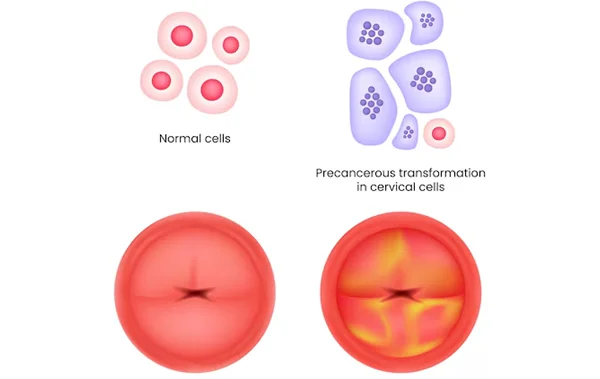
Early detection of pre-cancerous changes on the cervix is critical for preventing cervical cancer. Abnormal cervical cells, if untreated, can progress to malignancy over time. Dr. Akshata Bhatnagar offers expert evaluation, diagnosis, and management of pre-cancerous cervical lesions, using modern screening techniques and safe treatment procedures to ensure women maintain long-term reproductive health.
Pre-cancerous cervical lesions refer to abnormal changes in the cells lining the cervix, also known as cervical intraepithelial neoplasia (CIN). These changes are typically caused by persistent infection with high-risk human papillomavirus (HPV) strains and are reversible with timely treatment. Early detection prevents progression to cervical cancer.
Abnormal cervical cell changes occur due to persistent infection with high-risk HPV types (16 and 18). Additional risk factors include early sexual activity, multiple sexual partners, smoking, weakened immunity, and lack of regular cervical screening. These factors can trigger cellular changes, making early detection through screening essential for prevention.
Women of all reproductive ages are at risk, but pre-cancerous cervical changes are most commonly detected in women aged 25–45 years.
Key points:
Early screening is recommended from age 21
High-risk women may require earlier or more frequent monitoring
Regular follow-up ensures effective prevention of progression
Pre-cancerous cervical lesions often do not produce symptoms, which is why regular screening is vital. Some women may notice:
Unusual vaginal discharge
Mild bleeding after intercourse
Spotting between periods
Because these signs are often subtle, routine Pap smears and colposcopy are critical for detection.
Early detection and treatment of abnormal cervical cells prevent progression to cervical cancer and preserve reproductive health.
Benefits include:
Prevents cervical cancer
Detects cellular changes before symptoms appear
Allows less invasive treatment options
Reduces emotional and physical stress
Supports long-term reproductive and sexual health
Dr. Akshata Bhatnagar provides pre-cancerous cervical cell treatment in Gyna Khand 1, using minimally invasive and safe procedures.
Treatment options include:
Cryotherapy: Freezing abnormal cells to destroy them
Loop Electrosurgical Excision Procedure (LEEP): Removing abnormal tissue with precision
Laser therapy: Targeted destruction of abnormal cells
Follow-up Pap smears and colposcopy to ensure complete resolution
Counseling on lifestyle and HPV vaccination to prevent recurrence
Diagnosis and management follow a structured approach:
Pap smear to detect abnormal cells
Colposcopy to examine the cervix in detail
Biopsy if abnormalities are identified
Planning the appropriate treatment (cryotherapy, LEEP, or laser)
Post-procedure monitoring and follow-up
Counseling on preventive measures, including HPV vaccination
This approach ensures early intervention, minimal discomfort, and effective prevention of cervical cancer.
Dr. Akshata Bhatnagar is a trusted gynecologist specializing in early detection and management of cervical pre-cancerous lesions. Her patient-centric approach, modern diagnostic methods, and precise treatment techniques ensure high success rates with minimal invasiveness. Patients benefit from her expertise, compassionate care, and thorough guidance, making her a preferred choice for cervical health in Gyna Khand 1.
1. How often should I get screened for cervical pre-cancer?
Women should start Pap smears at age 21 and continue every 3 years, with more frequent screening for high-risk patients.
2. Can pre-cancerous cells be treated successfully?
Yes, with procedures like LEEP, cryotherapy, or laser therapy, pre-cancerous cells can be completely removed.
3. Is the treatment painful?
These procedures are minimally invasive, usually done under local anesthesia, with mild discomfort.
4. Can cervical pre-cancer come back?
Recurrence is rare with proper treatment, regular follow-up, and preventive measures such as HPV vaccination.
5. When should I consult a gynecologist?
Consult Dr. Akshata Bhatnagar if you have abnormal Pap results, unusual discharge, post-intercourse bleeding, or for routine cervical screening.



Comments
Be the first to review