
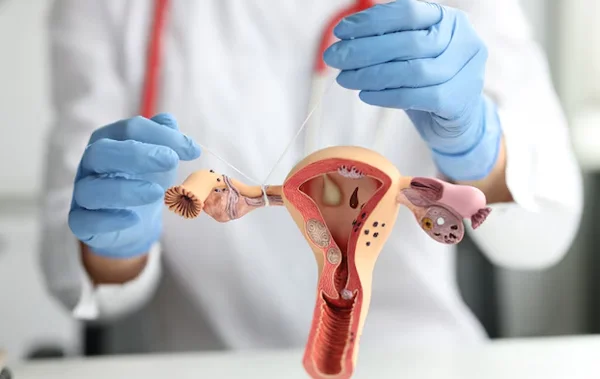
Tubal ligation is a permanent method of contraception for women who do not wish to have more children. It involves blocking or sealing the fallopian tubes to prevent the egg from meeting sperm. At Dr. Akshata Bhatnagar’s clinic, we provide both laparoscopic and open (mini-laparotomy) tubal ligation procedures with a focus on safety, minimal discomfort, and quick recovery.
Tubal ligation is a surgical procedure designed to provide permanent contraception.
Laparoscopic Tubal Ligation: A minimally invasive surgery performed through small incisions in the abdomen using a laparoscope. The fallopian tubes are sealed, clipped, or cauterised.
Open Tubal Ligation (Mini-Laparotomy): A slightly larger incision is made in the lower abdomen to access and block the fallopian tubes. This method is often used after childbirth.
Both techniques are highly effective in preventing pregnancy and can be performed under local or general anaesthesia depending on the patient’s condition.
Women often opt for tubal ligation after completing their families or when other contraceptive methods are unsuitable. Hormonal fluctuations, medical conditions, or the desire for permanent contraception make this procedure a safe and effective choice. In some cases, women with PCOD (Polycystic Ovarian Disease) or irregular cycles may benefit indirectly, as tubal ligation ensures contraception while other treatments address hormonal imbalances.
Laparoscopic Tubal Ligation:
Small incisions (5–10 mm) are made in the abdomen.
A laparoscope with a camera is inserted to view the fallopian tubes.
Tubes are blocked using clips, rings, or cauterisation.
Incisions are closed with minimal scarring.
Open Tubal Ligation (Mini-Laparotomy):
A small incision is made in the lower abdomen, often immediately after childbirth.
Fallopian tubes are identified and tied, cut, or sealed.
The incision is closed, and recovery typically takes a few days.
Both methods are outpatient or short-stay procedures with low risk and quick recovery.
Provides permanent contraception with over 99% effectiveness.
Reduces the risk of unintended pregnancies.
Minimally invasive laparoscopic approach ensures faster recovery and less scarring.
Can be combined with other procedures such as C-section or abdominal surgery for convenience.
No ongoing medication or daily attention required.
Dr. Akshata Bhatnagar brings expertise in both laparoscopic and open tubal ligation techniques, ensuring safety, minimal discomfort, and personalised care. With years of experience, she guides patients through counselling, helps them understand the procedure and recovery, and provides post-operative support for complete reassurance.
1. Is tubal ligation reversible?
Tubal ligation is considered a permanent method of contraception. Reversal is possible in some cases but is not guaranteed and requires complex surgery.
2. Which method is better: laparoscopic or open tubal ligation?
Laparoscopic tubal ligation is minimally invasive, has faster recovery, and less scarring. Open tubal ligation is preferred after childbirth or when laparoscopic facilities are unavailable.
3. How long is the recovery period?
Recovery after laparoscopic tubal ligation is typically 2–3 days for normal activities, while open tubal ligation may take 1–2 weeks.
4. Can I have tubal ligation immediately after delivery?
Yes. Open tubal ligation is often performed within 24–48 hours after delivery. Laparoscopic procedures may require waiting for the uterus to shrink.
5. Are there any side effects?
Most women experience mild cramps or soreness at the incision site. Serious complications are rare when performed by experienced gynaecologists.



Comments
Be the first to review