
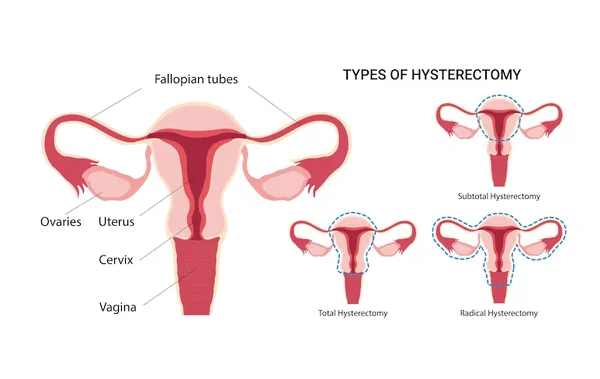
Hysterectomy is a major surgical procedure involving the removal of the uterus to treat a variety of gynaecological conditions. At Dr. Akshata Bhatnagar’s clinic, we provide expert gynaecologic treatment in Gyna Khand 1, offering both abdominal hysterectomy and vaginal hysterectomy with advanced surgical techniques, ensuring patient safety, minimal discomfort, and optimal recovery.
A hysterectomy is the surgical removal of the uterus. Depending on the patient’s condition and health requirements, the procedure may be performed in two main ways:
Abdominal Hysterectomy: Removal of the uterus through an incision in the lower abdomen. Suitable for large fibroids, severe endometriosis, or when additional structures like ovaries need assessment.
Vaginal Hysterectomy: Removal of the uterus through the vaginal canal without external incisions, ideal for cases like uterine prolapse or smaller uteri.
Both procedures may be total (removing the entire uterus) or partial (removing only the upper part of the uterus while retaining the cervix).
Hysterectomy may be recommended due to several medical conditions:
Fibroids: Benign growths causing pain, heavy bleeding, or pressure symptoms.
Endometriosis: Tissue growth outside the uterus causing chronic pain.
Uterine Prolapse: Weakening of pelvic muscles leading to the uterus descending into the vaginal canal.
Abnormal Uterine Bleeding: Severe or irregular bleeding unresponsive to medical therapy.
Cancer or Precancerous Conditions: Including uterine, cervical, or ovarian malignancies.
Early intervention prevents complications, improves quality of life, and addresses reproductive health concerns effectively.
Hysterectomy is usually considered for:
Women in reproductive age: When conservative treatments fail, and fertility preservation is not a concern.
Perimenopausal and postmenopausal women: To treat fibroids, prolapse, abnormal bleeding, or malignancies.
The type and timing of hysterectomy are tailored to age, reproductive plans, and medical condition.
Women may experience symptoms indicating the need for a hysterectomy:
Heavy, prolonged, or painful menstrual bleeding.
Severe pelvic or lower abdominal pain.
Pressure symptoms like frequent urination or constipation.
Vaginal prolapse or bulging.
Chronic fatigue due to anemia from blood loss.
Unexplained infertility or recurrent miscarriage.
Timely evaluation ensures that surgical intervention is safe and effective.
Provides permanent relief from pelvic pain, abnormal bleeding, or prolapse.
Treats fibroids, endometriosis, and other structural abnormalities effectively.
Prevents complications from malignancy or precancerous conditions.
Improves quality of life, physical comfort, and emotional well-being.
When performed vaginally or laparoscopically, offers faster recovery and minimal scarring.
Treatment is determined based on diagnosis, patient’s health, and surgical suitability:
Preoperative Evaluation: Blood tests, imaging, and general health assessment.
Surgical Intervention:
Abdominal Hysterectomy: Incision in the lower abdomen to remove the uterus.
Vaginal Hysterectomy: Removal of the uterus via the vaginal canal without external cuts.
Postoperative Care: Pain management, wound care, lifestyle guidance, and gradual return to activities.
Conservative alternatives, like myomectomy or hormonal therapy, may be considered when fertility preservation is desired.
Abdominal Hysterectomy:
General or spinal anaesthesia is administered.
Lower abdominal incision made, uterus and affected tissues removed.
Wound closed with sutures; hospital stay usually 3–5 days.
Vaginal Hysterectomy:
General or spinal anaesthesia is used.
Uterus removed via the vaginal canal, avoiding abdominal incision.
Faster recovery, minimal scarring, and shorter hospital stay (2–3 days).
Post-procedure follow-up ensures healing, early detection of complications, and guidance on lifestyle modifications.
Dr. Akshata Bhatnagar provides expert surgical care for both abdominal and vaginal hysterectomy, combining advanced techniques with personalised patient support. Patients benefit from:
Expertise in minimally invasive and major gynaecological surgeries.
Thorough preoperative assessment and counselling.
Compassionate care prioritising safety, comfort, and recovery.
Post-surgical support including pain management and follow-up care.
Holistic approach addressing both physical and emotional well-being.
Choosing Dr. Akshata ensures that hysterectomy is performed safely, effectively, and with full attention to patient care.
1. Is hysterectomy safe for all women?
Yes. With proper evaluation and skilled surgical care, hysterectomy is safe for women of various ages and health conditions.
2. What is the recovery time after abdominal vs vaginal hysterectomy?
Abdominal hysterectomy typically requires 3–5 weeks for full recovery, while vaginal hysterectomy usually allows return to normal activities in 2–3 weeks.
3. Will hysterectomy affect hormones or menopause?
If ovaries are preserved, natural hormone production continues. If ovaries are removed, menopausal symptoms may occur, which can be managed with medical guidance.
4. Can I have children after hysterectomy?
No. Hysterectomy removes the uterus, making pregnancy impossible. Alternative options like surrogacy may be considered.
5. Are there risks or complications?
All surgeries carry some risk, including infection, bleeding, or injury to surrounding organs, but advanced techniques and expert care minimize these risks significantly.



Comments
Be the first to review