
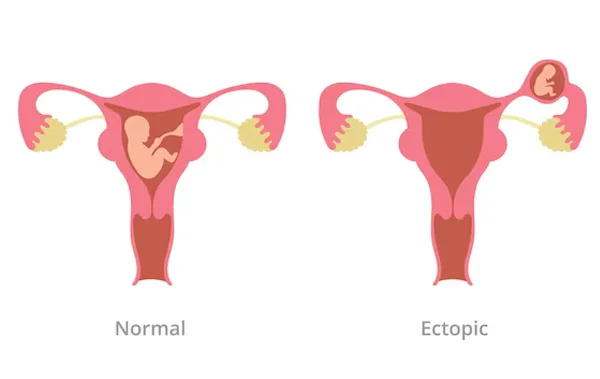
An ectopic pregnancy occurs when a fertilized egg implants outside the uterus, most commonly in the fallopian tube. This is a potentially life-threatening condition that requires prompt diagnosis and management. At Dr. Akshata Bhatnagar’s clinic, we provide expert gynaecologic treatment in Gyna Khand 1, offering timely, safe, and personalised care for women experiencing ectopic pregnancy, preserving fertility whenever possible.
Ectopic pregnancy is a condition where a fertilized egg implants outside the uterine cavity, typically in the fallopian tubes. Rarely, it may occur in the ovary, cervix, or abdominal cavity. Without proper management, the condition can lead to internal bleeding and severe complications.
Management may include:
Medical management: Use of medications like methotrexate to terminate the ectopic pregnancy in early, stable cases.
Surgical management: Laparoscopic or open surgery to remove the ectopic pregnancy while preserving reproductive organs.
Supportive care: Monitoring, blood tests, and follow-up imaging to ensure complete resolution.
Ectopic pregnancy can occur due to several risk factors:
Damage or blockage of fallopian tubes due to infections, surgery, or endometriosis.
Previous ectopic pregnancy or tubal surgery.
Hormonal imbalances or PCOD (Polycystic Ovarian Disease).
Use of assisted reproductive techniques.
Smoking or age-related factors affecting tubal motility.
Early detection is crucial to prevent complications such as internal bleeding, tubal rupture, and infertility.
Ectopic pregnancies are most common in women of reproductive age:
20–35 years: Most common age group for ectopic pregnancy.
Above 35 years: Risk increases due to tubal changes or previous pelvic surgeries.
Prompt management is necessary regardless of age to preserve fertility and maternal health.
Symptoms that may indicate an ectopic pregnancy include:
Missed periods or abnormal vaginal bleeding.
Lower abdominal or pelvic pain, often unilateral.
Shoulder pain in cases of internal bleeding.
Weakness, dizziness, or fainting in severe cases.
Gastrointestinal discomfort or nausea.
Immediate evaluation is essential if these symptoms occur during early pregnancy.
Prevents life-threatening internal bleeding.
Preserves fallopian tubes and fertility whenever possible.
Reduces risk of recurrence and long-term complications.
Provides emotional support and counselling during a stressful event.
Ensures safe recovery through advanced monitoring and care.
Treatment depends on the patient’s condition, gestational age, and tubal status:
Medical Management:
Methotrexate injection in early, unruptured ectopic pregnancies.
Monitors beta-hCG levels to ensure resolution.
Surgical Management:
Laparoscopic Salpingostomy: Removal of ectopic tissue while preserving the fallopian tube.
Salpingectomy: Removal of the affected fallopian tube in severe cases or ruptured tubes.
Open Surgery (Laparotomy): For unstable patients or complicated ectopic pregnancies.
Post-Treatment Care:
Pain management, hormonal monitoring, and emotional counselling.
Guidance for future conception and early pregnancy monitoring.
Initial Assessment: Ultrasound and beta-hCG tests to confirm ectopic pregnancy.
Medical Approach: Single or multiple methotrexate injections under supervision, followed by monitoring.
Surgical Approach:
Laparoscopic removal under general anaesthesia for precise and minimally invasive treatment.
Open surgery if necessary for rupture or heavy internal bleeding.
Follow-Up: Serial beta-hCG testing, ultrasound imaging, and reproductive counselling.
Dr. Akshata Bhatnagar provides expert management of ectopic pregnancies with a focus on:
Prompt diagnosis and timely intervention.
Fertility-preserving surgical techniques whenever possible.
Compassionate support for emotional and physical well-being.
Advanced laparoscopic skills for minimally invasive management.
Comprehensive post-treatment care and guidance for future pregnancies.
1. Can fertility be preserved after an ectopic pregnancy?
Yes. If detected early and treated appropriately, fertility can be preserved, especially with laparoscopic surgery.
2. What are the signs of a ruptured ectopic pregnancy?
Severe abdominal pain, dizziness, fainting, and shoulder tip pain may indicate rupture and require emergency care.
3. How soon can I try to conceive after treatment?
Medical and surgical recovery typically takes 1–3 months; your doctor will provide personalised guidance.
4. Can ectopic pregnancy happen again?
There is a slightly higher risk in women with a history of ectopic pregnancy, tubal surgery, or pelvic infections.
5. Is laparoscopic management safer than open surgery?
Yes. Laparoscopy is minimally invasive, offers faster recovery, less pain, and shorter hospital stays while preserving fertility whenever possible.



Comments
Be the first to review