
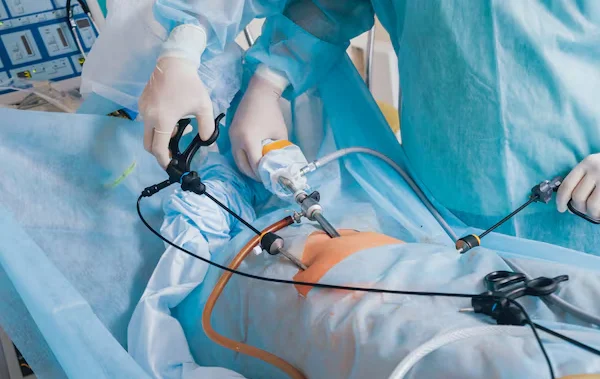
Modern gynaecology has been revolutionised by diagnostic and advanced laparoscopic, urogynaecological, and minimally invasive surgeries. At Dr. Akshata Bhatnagar’s clinic, we offer comprehensive gynaecologic treatment in Gyna Khand 1, providing precise diagnosis and treatment for conditions such as ovarian cysts, fibroids, tumours, infertility, endometriosis, urinary incontinence, and ectopic pregnancy. Minimally invasive techniques ensure faster recovery, reduced pain, and preservation of reproductive and pelvic organ function.
These procedures involve using small incisions, cameras, and specialised instruments to diagnose and treat gynaecological disorders without the need for large abdominal surgeries. They include:
Diagnostic Laparoscopy: Visual examination of pelvic organs to identify abnormalities causing infertility, pain, or menstrual irregularities.
Therapeutic Laparoscopy: Surgical removal of ovarian cysts, fibroids, endometriotic lesions, adhesions, and tumours.
Urogynaecological Surgeries: Corrects urinary incontinence, pelvic organ prolapse, and other bladder or pelvic floor dysfunctions.
Minimally Invasive Surgeries: Keyhole surgeries that reduce scarring, bleeding, and hospital stay while offering precise treatment.
This integrated approach allows treatment and diagnosis in the same session whenever possible.
Women may require these procedures due to:
Ovarian cysts and fibroids: Causing pain, menstrual irregularities, or fertility issues.
Endometriosis: Tissue growth outside the uterus leading to pain and infertility.
Tumours: Benign or malignant growths requiring removal.
Infertility: Tubal blockage, adhesions, or unexplained causes.
Urinary incontinence and pelvic floor disorders: Weakness or prolapse affecting bladder control.
Ectopic pregnancy: Implantation outside the uterus requiring surgical intervention.
Early evaluation and minimally invasive intervention reduce complications and improve reproductive and pelvic health.
These procedures are suitable for women across reproductive and perimenopausal age groups:
Reproductive-age women (20–40 years): For fertility preservation, cysts, fibroids, and endometriosis.
Perimenopausal women (40–50 years): For symptomatic fibroids, prolapse, or urinary incontinence.
Older women (>50 years): For management of benign or malignant tumours and pelvic floor disorders.
Treatment is customised based on age, overall health, and reproductive goals.
Women who may benefit from these surgeries often present with:
Chronic pelvic or lower abdominal pain.
Heavy or irregular menstrual bleeding.
Infertility or recurrent pregnancy loss.
Urinary incontinence, urgency, or frequency.
Pelvic organ prolapse or feeling of heaviness.
Palpable masses in the ovary or uterus.
Accurate diagnosis through laparoscopic and minimally invasive techniques ensures timely and effective treatment.
Precision and Safety: Direct visualization ensures accurate diagnosis and treatment.
Minimally Invasive: Reduced scarring, pain, and hospital stay.
Fertility Preservation: Removes pathology while maintaining reproductive potential.
Faster Recovery: Most procedures allow return to daily activities within 1–2 weeks.
Comprehensive Management: Allows treatment of multiple gynaecologic conditions in a single session.
Reduced Complications: Less bleeding, infection, and postoperative adhesions compared to open surgery.
Diagnostic Laparoscopy: Helps identify pelvic causes of pain, infertility, or abnormal bleeding.
Therapeutic Interventions:
Ovarian cystectomy: Removal of ovarian cysts.
Myomectomy: Removal of fibroids while preserving the uterus.
Excision of endometriosis: Reduces pain and improves fertility.
Removal of benign or malignant tumours: Ensures optimal surgical outcomes.
Management of ectopic pregnancy: Safely resolves early or advanced cases.
Urogynaecological procedures: Corrects urinary incontinence, prolapse, or pelvic floor weakness.
Postoperative Care: Individualised pain management, early mobilisation, and follow-up imaging to monitor recovery.
Treatment plans are tailored according to condition severity, reproductive goals, and patient health.
Preoperative Assessment: Blood tests, imaging (ultrasound, MRI), and health evaluation.
Anaesthesia: General anaesthesia ensures comfort and safety.
Laparoscopic Access: Small incisions (5–10 mm) for insertion of camera and instruments.
Diagnosis and Surgery: Identification and removal or repair of pelvic pathology.
Closure: Tiny incisions are closed with minimal scarring.
Recovery: Hospital stay 1–3 days; full recovery in 1–2 weeks depending on procedure complexity.
Minimally invasive approaches offer both therapeutic and diagnostic benefits with reduced complications.
Dr. Akshata Bhatnagar provides advanced laparoscopic and urogynaecological care with:
Expertise in minimally invasive techniques for complex gynaecologic conditions.
Fertility-preserving procedures wherever possible.
Personalised pre- and postoperative counselling and care.
Focus on rapid recovery and minimal scarring.
Compassionate approach to both physical and emotional well-being.
Choosing Dr. Akshata ensures safe, precise, and comprehensive gynaecologic care.
1. Is laparoscopy safe for treating all gynaecologic problems?
Yes. Laparoscopy is a safe, minimally invasive option for cysts, fibroids, endometriosis, infertility, and pelvic floor disorders.
2. How long does it take to recover?
Recovery is generally 1–2 weeks for most laparoscopic procedures, depending on complexity.
3. Can laparoscopic surgery improve fertility?
Yes. Procedures like myomectomy, endometriosis excision, and tubal repair can significantly enhance fertility.
4. Is hospital stay required for all laparoscopic surgeries?
Most are day-care or 1–3 days stay, depending on procedure complexity and patient health.
5. Are there risks with minimally invasive surgery?
Risks are low, including bleeding or infection. Expert surgical care ensures safety and effective outcomes.



Comments
Be the first to review