
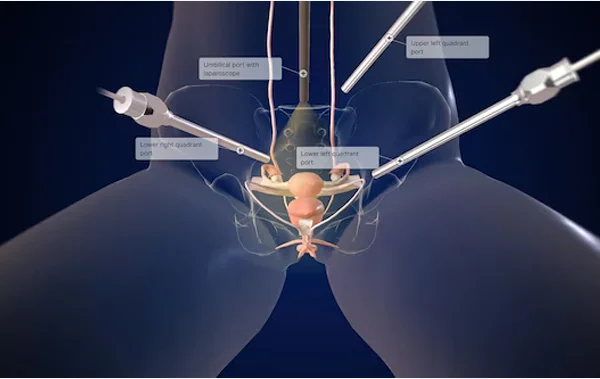
Total Laparoscopic Hysterectomy (TLH) is a minimally invasive surgical procedure to remove the uterus, including the cervix, through small abdominal incisions using advanced laparoscopic techniques. At Dr. Akshata Bhatnagar’s clinic, we provide expert gynaecologic treatment in Gyna Khand 1, offering TLH for conditions like fibroids, adenomyosis, abnormal uterine bleeding, chronic pelvic pain, and early-stage uterine cancer. This approach ensures faster recovery, less pain, and minimal scarring compared to traditional open surgery.
Total Laparoscopic Hysterectomy involves:
Removal of the entire uterus, including the cervix.
Preservation of ovaries (if not diseased) to maintain hormonal balance, if suitable.
Use of laparoscopic instruments and camera inserted through 3–4 small abdominal incisions.
Minimal blood loss, shorter hospital stay, and faster return to daily life compared to open abdominal hysterectomy.
TLH is suitable for benign and early malignant conditions where complete uterine removal is required.
TLH is performed for various gynaecologic conditions, such as:
Uterine fibroids causing pain, pressure, or heavy menstrual bleeding.
Adenomyosis resulting in chronic pain or bleeding.
Abnormal uterine bleeding unresponsive to medical management.
Pelvic organ prolapse in selected cases.
Early-stage uterine or cervical cancer requiring definitive treatment.
Chronic pelvic pain due to uterine pathology.
The procedure is recommended when conservative treatments fail or when definitive management is necessary.
Total Laparoscopic Hysterectomy is commonly performed in:
Perimenopausal women (40–50 years): Most common age group for benign uterine conditions.
Postmenopausal women: Often for abnormal bleeding or early-stage cancer.
Younger women: Rare, only if medical management fails and fertility preservation is not a priority.
Individualised evaluation ensures the procedure suits age, health, and reproductive goals.
Women requiring TLH often present with:
Heavy or prolonged menstrual bleeding.
Chronic pelvic pain or pressure.
Fibroids or adenomyosis detected on imaging.
Recurrent infections or pelvic discomfort.
Abnormal uterine bleeding resistant to medications.
Prolapse or discomfort due to enlarged uterus.
Early diagnosis and timely surgery prevent complications like anemia or worsening pain.
Minimally invasive removal of the uterus with precise surgical control.
Reduced blood loss and faster recovery compared to open hysterectomy.
Shorter hospital stay and quicker return to daily activities.
Relief from pain, bleeding, or pressure caused by uterine conditions.
Preservation of ovarian function where feasible.
Low risk of complications and excellent long-term outcomes.
Preoperative Assessment: Blood tests, ultrasound, MRI, and sometimes endometrial biopsy.
Surgical Procedure (TLH):
General anaesthesia is administered.
Small incisions made in the lower abdomen for laparoscope and instruments.
Uterus, including the cervix, is detached and removed via laparoscopic techniques.
Surrounding organs and structures are assessed for safety.
Postoperative Care: Pain management, early mobilisation, and wound care.
Follow-Up: Ensures complete recovery, hormonal evaluation if ovaries are retained, and advice on lifestyle adjustments.
Treatment is customised based on uterine size, pathology, and patient health.
Anaesthesia: Patient placed under general anaesthesia.
Incisions: 3–4 small keyhole incisions in the abdomen.
Insertion of Laparoscope: Camera provides a magnified view of pelvic organs.
Dissection: Uterus and cervix are carefully detached from surrounding ligaments and blood vessels.
Extraction: Uterus removed through small incisions or morcellation if necessary.
Closure: Incisions sutured; minimal scarring occurs.
Recovery: Hospital stay 1–2 days; full recovery in 2–4 weeks depending on procedure complexity.
Dr. Akshata Bhatnagar offers TLH with:
Advanced laparoscopic techniques for safe and precise uterine removal.
Personalised care focusing on pain control and faster recovery.
Preservation of ovarian and reproductive health where feasible.
Expertise in managing both benign and early malignant uterine conditions.
Compassionate counselling to guide patients through treatment and recovery.
Choosing Dr. Akshata ensures a safe, minimally invasive, and effective solution for uterine conditions requiring hysterectomy.
1. Is TLH better than traditional open hysterectomy?
Yes. TLH offers smaller incisions, less pain, faster recovery, and shorter hospital stay.
2. How long is the recovery period?
Most patients resume normal activities within 2–4 weeks, with hospital stay usually 1–2 days.
3. Will I experience menopause after TLH?
If ovaries are preserved, hormonal balance is maintained; removal of ovaries induces surgical menopause.
4. Can TLH be performed for large fibroids?
Yes, TLH can be adapted for enlarged uteri, though surgical approach may vary depending on size.
5. Are there risks with TLH?
Risks are low but may include bleeding, infection, or injury to surrounding organs. Expert surgical care minimises these risks.



Comments
Be the first to review